Your facility requires regular sanitation protocols tailored to specific risks, daily throughput, food allergens, and regulatory visits, with verifiable documentation validating HACCP requirements, compliance audits, and public health regulations. The information following provide details about essential cleaning protocols.
Main Points
- Brampton's food safety cleaning experts provide services to restaurants, grocery departments, commissaries, warehouses, bakeries, schools, mobile vendors, and allergen-sensitive operations.
- They clean frequently contacted areas, food-contact equipment, kitchens, floors, drains, restrooms, and storage areas using sectional methods to avoid cross-contamination.
- Validation of approved sanitizer dilution, suitability, and exposure duration is conducted by qualified contractors, with completion logged using swabs, inspections, and correction logs.
- Sound hygiene calendars account for threat, production rate, transitions, releases, and requirements when designating routine, regular, and cyclical duties by section.
- Suppliers need to have hazard analysis knowledge, health regulatory understanding, WHMIS education, insurance, endorsements, color-coded implements, and inspection-ready hygiene documentation.
Which Brampton Facilities Need Food Safety Cleaning?
Any Brampton facility that processes, stores, prepares, packages, or distributes food needs food sanitation. You must apply it if your facility falls under health department oversight, food regulations, or HACCP requirements. That requirement covers eateries, dining facilities, food distribution centers, supermarket departments, meat markets, fish counters, corner stores, and commercial kitchens.
You also need compliant food safety cleaning in distribution centers, food processing plants, freezer facilities, commercial bakeries, educational nutrition programs, event spaces, and catering hubs. Mobile and seasonal operations count too, including mobile kitchens, festival sellers, and temporary food stands. If your staff process ingredients, portion ready-to-eat items, reheat products, or store allergens, your facility needs documented cleaning protocols. In Brampton, hygiene isn't discretionary; it's part of statutory, business, and public health compliance.
Which Areas Do Brampton Cleaning Experts Cover?
You require experienced cleaning professionals who sanitize frequently touched areas, cooking areas, flooring, and restroom facilities to maintain food safety and public health requirements. These locations are prioritized due to their high cross-contamination potential, falling hazards, and health code violations.
If you grasp what they sanitize, you'll successfully ensure your facility meets all operational and regulatory compliance needs.
Sterilizing High-Touch Points
Skilled Brampton facility managers recognize that high-touch surfaces require sanitizing since these areas accumulate bacteria, viruses, and food residue. You need a scheduling system for sanitizing door handles, push plates, switches, railings, shared equipment controls, POS terminals, and refrigerator pulls. Employing contact point analysis, specialists identify every commonly touched surface and establish cleaning intervals
sample analysis to verify cleaning results
Kitchen Areas, Floor Surfaces, and Bathroom Spaces
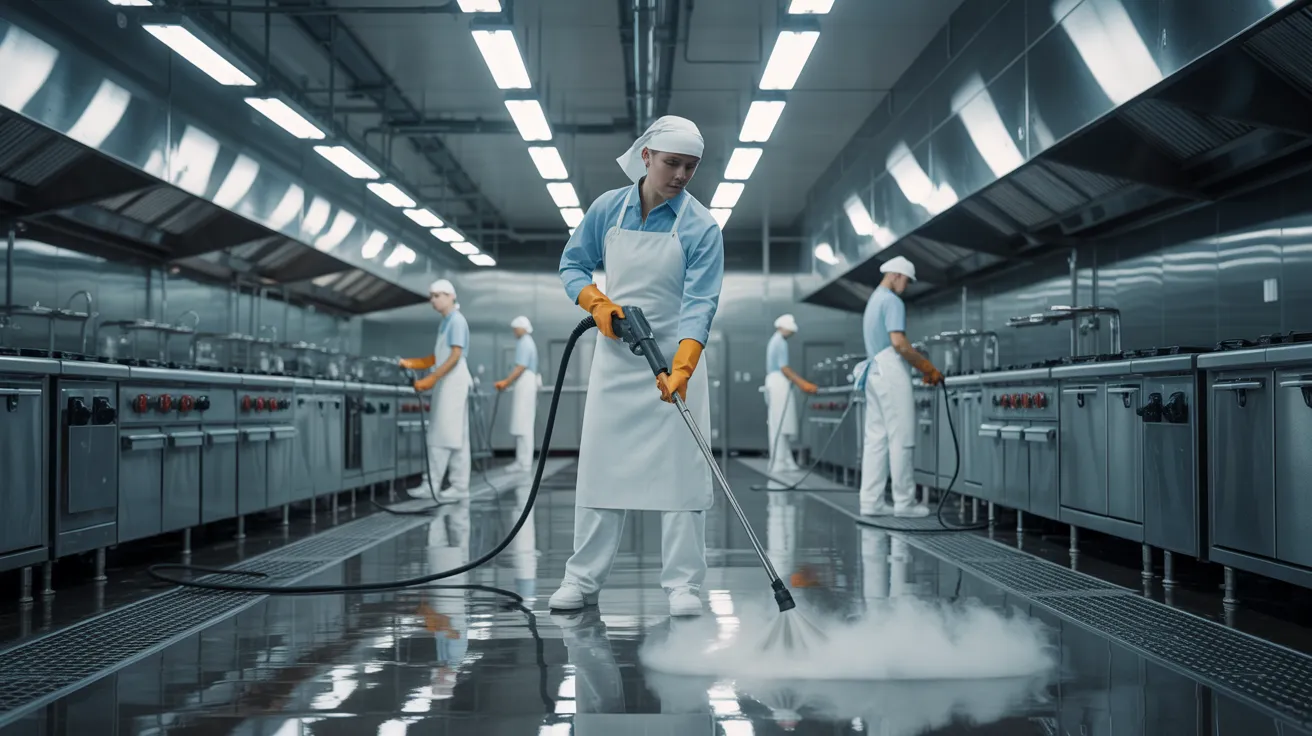
Brampton cleaning services focus on kitchens, floors, and restrooms as each zone involves different sanitation, accident, and wellness concerns. In industrial kitchens, you need grease removal from cooking stations, appliance surfaces, drain systems, preparation areas, and backsplashes to minimize contamination and pest pressure.
You should also expect documented flooring maintenance. is likewise provided as part of the service.
Restroom sanitation involves sanitizing surfaces, fittings, separators, dispensers, and containers, restocking supplies and controlling odours. They also service restaurant moprooms, where chemical storage, sink hygiene, and drainage conditions can affect sanitation compliance and staff safety daily.
Food Safety Cleaning Significance for Brampton Businesses
To comply with health code requirements and succeed in audits, Brampton facilities must maintain appropriate cleaning protocols. You also reduce cross-contamination by cleaning and sanitizing food-contact surfaces, equipment, and high-touch areas correctly. Most importantly, you help protect community wellness by reducing the chance of food poisoning in your establishment.
Food Safety Regulations
Brampton food establishments must comply with strict public health standards, so hygiene maintenance is critical to satisfying health codes, ensuring the safety of customers, and avoiding penalties. You must maintain sanitized food contact points, written maintenance records, safe chemical management, and auditable operational standards that correspond to municipal and provincial inspection expectations.
Failure to maintain cleaning standards results in citations, compliance orders, reputational damage, and operational suspension during additional reviews or compliance reviews.
Cross-Contamination Prevention
Following health code standards depends on your ability to prevent cross-contamination in daily food handling and cleaning. You should isolate raw items from prepared foods, sanitize prep surfaces between tasks, and maintain separation of cleaning products from food. Clear procedures reduce transfer risks and support consistent compliance during inspections.
Implementing allergen separation helps keep priority allergens from contacting communal work zones, bins, or devices. Deploy dedicated cutting boards, color-coded tools, and strict utensil labeling so staff don't mix items during preparation or service. Enforce hand hygiene following fresh proteins, aquatic items, egg products, or allergen materials. Replace wiping cloths regularly, and verify sanitizer strength with test strips. When your team learns these guidelines every shift, you create a cleaner, safer operation that meets Brampton's food safety expectations regularly.
Public Health Defense
Should food safety cleaning collapse, you don't simply risk a failed inspection—you expand the odds of contamination-related sickness harming customers, staff, and the wider Brampton community. You also weaken your role in protecting public health, especially in busy food facilities where pathogens travel quickly through surfaces, equipment, and touchpoints.
You require cleaning procedures that eliminate soils, sanitize properly, and confirm effectiveness. This requires following contact periods, employing authorized sanitizers, logging schedules, and instructing staff to satisfy regulatory standards. These mechanisms support disease prevention by limiting pathogens before contaminating food or surfaces. Across Brampton, effective sanitation protects at-risk populations, reduces disease potential, and demonstrates accountability. When you maintain proper protocols, you go beyond requirements—you meaningfully reduce risk and facilitate secure food handling throughout the area.
In What Ways Does Cleaning Help Achieve Food Safety Compliance?
Embracing thorough cleaning protocols underpins food safety compliance by lowering contamination exposure, managing pathogen expansion, and keeping your facility aligned with sanitation requirements under HACCP-based programs and public health regulations. You validate that food-handling surfaces stay visibly clean and microbiologically controlled, supporting documented preventive controls and inspection readiness.
Cleaning strategies additionally amplify allergen mitigation by removing residues that can lead to undeclared allergen exposure.
Finding When to Plan Commercial Cleaning
accumulate contaminants. Boost frequency
Handling occasional tasks distinctly guarantees better scheduling.
How Do You Choose Brampton Cleaning Experts?
Start by screening providers against food-safe sanitation requirements, not cost only. You should verify that each company understands CFIA, public health, and HACCP compliance standards relevant to your facility. Ask for insurance documentation, WHMIS compliance, full details documented staff training, and supervision practices. Review whether technicians understand cross-contamination risks, chemical handling, and traceable sanitation records.
You should also assess business dependability and responsibility. Request references from Brampton food businesses, then examine response times, corrective-action procedures, and communication standards. Confirm the company participates in supplier audits and can present inspection-ready documentation when regulators or third parties request evidence. Check whether equipment maintenance is performed, colour-coded tools are used appropriately, and facility-specific risks are recognized. A qualified provider protects compliance, product integrity, and your brand reputation.
What details should a Food Safety Cleaning Plan include?
Write out a framework that outlines every sanitation activity, guideline, and role before starting production. You should record cleaning schedules, approved products, ratios, contact periods, tools, and validation approaches for each zone, surface, and piece of equipment. Ensure you include pre-operational inspections, corrective actions, and employee training requirements.
Your plan should also cover contamination prevention, garbage management, pest control procedures, and recorded timelines for restrooms, drains, floors, and food-contact areas. Explain how you'll keep raw and prepared foods apart, enable ingredient tracking, and ensure accurate allergen labeling through validated cleaning between product changes. You should designate accountability, maintain signed records, and compare results against regulatory standards, HACCP controls, and customer requirements. When gaps appear, revise procedures immediately and re-educate staff.
Commonly Requested Questions
Are sanitation providers available for overnight shifts in Brampton facilities?
If you manage controlled environments, you'll also require records that support audits and maintain assurance.
Can sanitation professionals manage hazardous incidents?
Yes, you can find many Brampton sanitation experts offering spill containment services. They handle contamination, evaluate risks, isolate zones, and perform swift decontamination to reduce exposure and prevent disruption. You should verify response times, certifications, safety measures, and disposal methods. If your facility needs compliance, pick a provider that logs events, follows procedures, and supports audits.
Do eco-friendly disinfectants perform safely on food preparation areas?
Yes, eco-friendly disinfectants can be suitable for food-handling equipment if you choose products labeled food safe and meeting regulatory standards. You should validate exposure duration, dilution rates, and rinsing needs before application. Many plant based formulas minimize harsh chemical exposure, but you still need confirmation of performance against target microorganisms. To ensure residue-free conditions, you must adhere to exact manufacturer guidelines and validate the disinfecting agent meets applicable food industry sanitation standards.
Can cleaning schedules adjust with seasonal variations?
Certainly, cleaning plans respond to seasonal production changes well. Adjust frequencies, staffing, cleaning agents, and validation steps to align with seasonal patterns while sustaining regulatory compliance. Minimize equipment downtime by timing sanitation during production shifts, peak seasons, and usage patterns. Concurrently update procedural documents, training, and facility monitoring to reflect temporary risks, novel allergens, or increased soil loads. Regular reviews preserve your program efficient.
Do commercial cleaning providers instruct staff members in sanitation best practices?
Yes, commercial cleaners often train your staff on hygiene standards. You get staff training on proper chemical use, exposure periods, contamination control, equipment disassembly, and record keeping. They generally follow training with HACCP, GMP, and CFIA or regional health department regulations. Many also conduct sanitation audits to confirm adherence, identify gaps, and reinforce corrective actions. This allows you to sustain uniform processes, succeed in audits, and minimize contamination hazards daily.
Final Thoughts
Through engaging Brampton food safety and commercial cleaning specialists, you do far more than tidy—you ensure your facility for inspections and your standards stay aligned with regulations. From production floors to kitchens, all maintained surfaces and organized zones help prevent pest problems and prevent significant costs. Through booking service at proper intervals and sticking to a solid cleaning plan, you ensure protection for your team, your patrons, and your good name. Within strict regulatory frameworks, clean conditions must be a priority—they represent good business practice.